

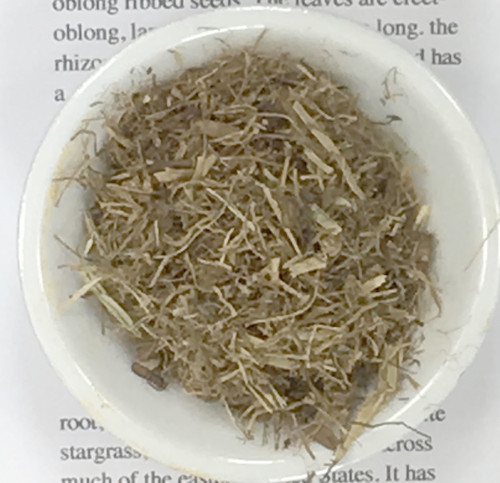
Unicorn Root
Aletris farinosa
“Orally, aletris is used for rheumatism, as a general tonic, a sedative, to relieve menstrual disorders, as a laxative, an antiflatulent, an antispasmodic, for colic, as an antidiarrheal, and a diuretic. It is also used orally for infertility, dyspepsia, and to prevent miscarriage.”
- http://naturaldatabase.therapeuticresearch.com/nd/Search.aspx?cs=NONMP&s=ND&pt=100&id=605&ds=&
“Aletris was popularised by Ellingwood, one of the early American herbalists, who claimed that it should be given to tired, overworked and anaemic women who were suffering from the consequences of giving birth too frequently. He and others found it especially helpful for anaemia, constipation or leucorrhoea of peri-menopausal women. Good results are also achieved with pelvic floor weakness and prolapse, particularly in older women with low back pain.
“This is one of the best uterine tonics for women with a sense of pelvic heaviness or congestion, and seems to be especially beneficial for women in their forties and fifties.
“Aletris can be taken by women of any age, however, for conditions which are accompanied by a sense of pelvic discomfort, heaviness, a dragging sensation, or a feeling ‘as though everything might fall out’.
“In the past, the true unicorn root, Aletris farinosa, and the false unicorn root, Chamaelirium luteum, were frequently substituted for one another. Both were used to regulate the activity of the menstrual cycle and as women’s tonics, presumably because both (and many other plants besides) yield the steroidal sapogenin, diosgenin, which has a mild ‘oestrogenic’ effect.
“Early animal experiments revealed that Aletris can have contradictory effects on uterine muscle, and can exert the entire spectrum of effects from relaxation to stimulation in the same animal species and between different animal species. In most experiments, however, Aletris reduced the amplitude of uterine contractions which may explain its historical use, in combination with spasmolytic herbs for the prevention of miscarriage. Because of the conflicting reports on its actions, and because it needs to be used in combination with other herbs, its use by the untrained, especially during pregnancy, is unwise.
As is common with all uterine tonics, Aletris is recommended for the whole spectrum of gynaecological disorders, from light or absent periods, to periods which are too heavy or too frequent; for period pain and infertility; for the symptoms associated with a retroverted uterus and for leucorrhoea. This property is shared by all tonic herbal remedies—they are seen to regulate irrespective of the problem. The additional herbs in the formula direct the therapeutic effect towards the desired outcome."
- http://aibolita.com/womens-diseases/40438-aletris-farinosa-true-unicorn-root.html


